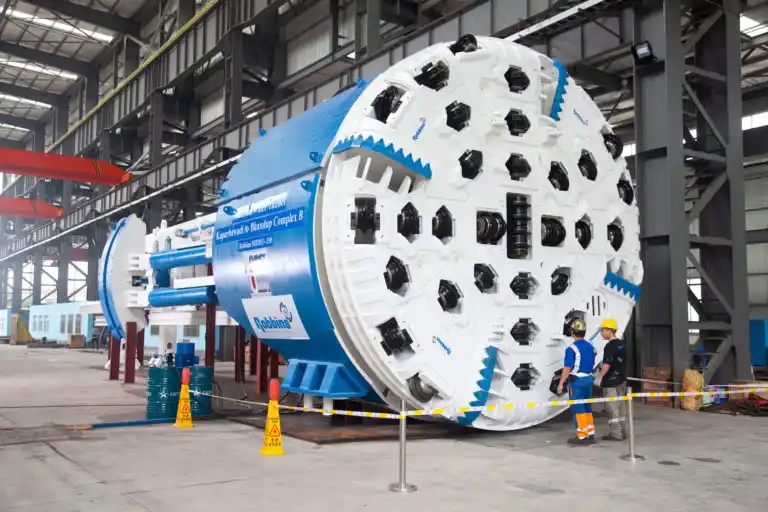
01 / Water Tunel Drilling & Tunnel Boring Machines
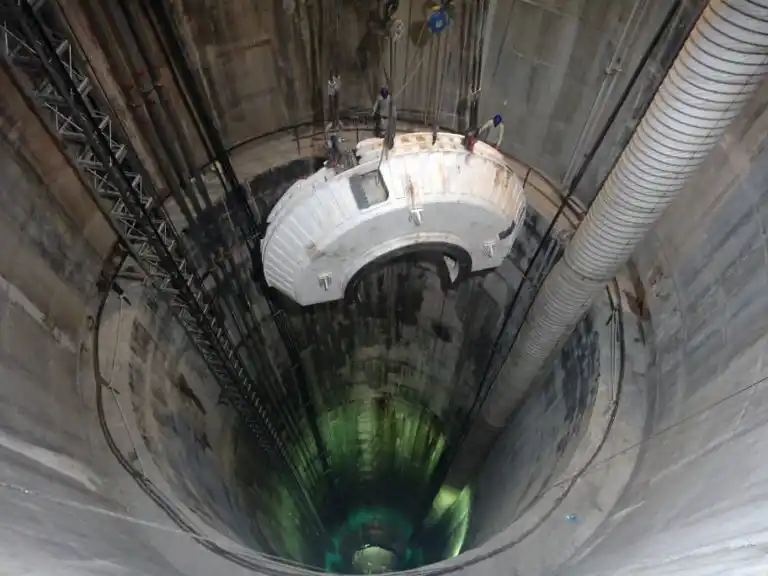
02 / Continuous Operations
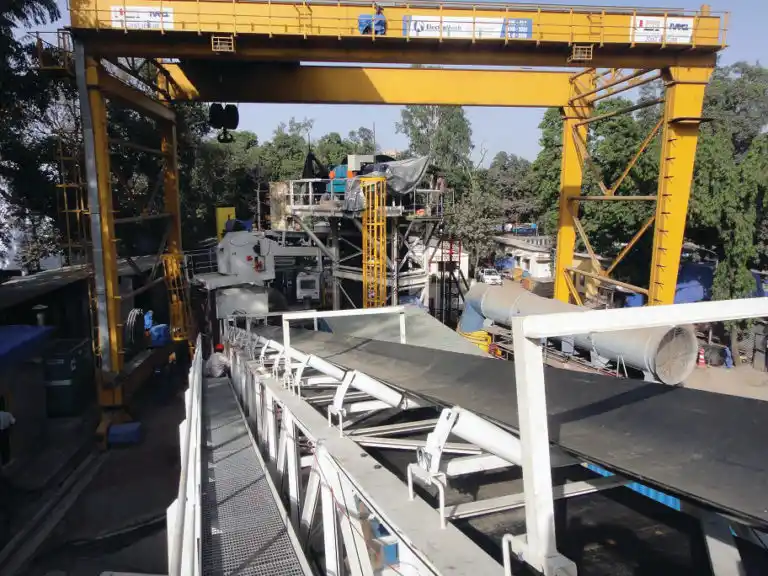
03 / Modernized Standards
Execution Challenge
The tunnel was driven through hard Deccan Basalt at depths of 109 metres (Kapurbawdi) and 125 metres (Bhandup), with the TBM required to safely manage incoming groundwater, especially when crossing beneath the Kasheli River and the lakes in the Thane district.
Abrasive basalt rock and fractured ground with the potential for water inflows contamination presented continuous machine wear and face stability risks throughout the drive. First-time TBM deployment in the Mumbai region added an additional layer of technology execution risk for the contractor team.
Because the alignment passes through highly populated, dense urban areas with high-rise structures, traditional drilling and blasting methods were completely avoided.
TBM Usage: TBMs were required to achieve rapid and continuous excavation (averaging over 400 meters a month) without causing surface disturbances or structural damage.
Strategic Role
Being a senior leadership at the Unity Infraprojects Limited (Joint Venture Contractor on the project), Mr Avarrsekar's responsibilities spanned bid strategy, project governance, JV coordination, and execution oversight.
He led the process of demonstrating the company's technical readiness for first-time TBM deployment in Mumbai, aligning the contractor's capability framework with the client's evaluation requirements.
His risk oversight function covered TBM procurement, shaft logistics planning, groundwater management strategy, and MCGM stakeholder engagement throughout construction.
Actions Taken
TBM Procurement and Specification: Coordinated the procurement of a Herrenknecht Gripper TBM (6.25m diameter, 2,100 kW cutterhead power), specifying drainage capability for anticipated groundwater ingress under the Kasheli River crossing.
OFTA Deployment: Adopted Onsite First Time Assembly (OFTA) methodology at the shaft bottom, assembling the main bearing, lube system, backup decks, and conveyor systems within a 100-metre starter chamber and 50-metre tail tunnel, saving the contractor both time and cost by eliminating pre-assembly at the Shanghai manufacturing facility.
Vertical Muck Extraction: Deployed the largest vertical conveyor built by H+E Logistik at that time to transport excavated material through the 109-metre launch shaft, maintaining continuous production without surface bottlenecks.
Navigation System Integration: Deployed a VMT guidance system for continuous tunnel trajectory monitoring across the 8.3-kilometre alignment.
Ground Support Management: Applied shotcrete lining as the primary rock support method in stable basalt, with additional rock bolting and steel arches deployed reactively in fractured zones.
Programme Governance: Maintained production rates and milestone reporting to the MCGM, ensuring no significant contractual delays.
Outcome
The TBM breakthrough was achieved in September 2013, completing the tunnelling drive within the projected 18-month window, against a conventional drill-and-blast estimate of five years for the same alignment.
Peak production reached up to 215 metres of shotcrete-lined tunnel per week. The completed tunnel enables an additional 455 million litres per day of clean drinking water to reach Mumbai's residents, supplying the Bhandup filtration plant reliably through both monsoon and dry seasons.
The project established the first successful TBM deployment record in Mumbai's water infrastructure sector, directly informing future underground tunnelling decisions in the city.
Technical Data of Record
Location | Client
Kapurbawdi, Thane to Bhandup Water Filtration Complex, Mumbai, Maharashtra | Municipal Corporation of Greater Mumbai (MCGM)
Duration
TBM launch: June 2012; Breakthrough: September 2013 (~18-month drive)
Safety Measures
Confined space protocols at depth; TBM invert drainage system; monsoon planning
Tunnel Length
8.3 kilometres
Maximum Depth
125 metres below ground level (Bhandup end)
Outcome
Additional water supply to Mumbai approx. 3.12 billion liters
Discover the Full Strategy
Explore the detailed methodologies, execution frameworks, and deep-dive analytics in our comprehensive case study.
Request the Project Case Study
Popular Project