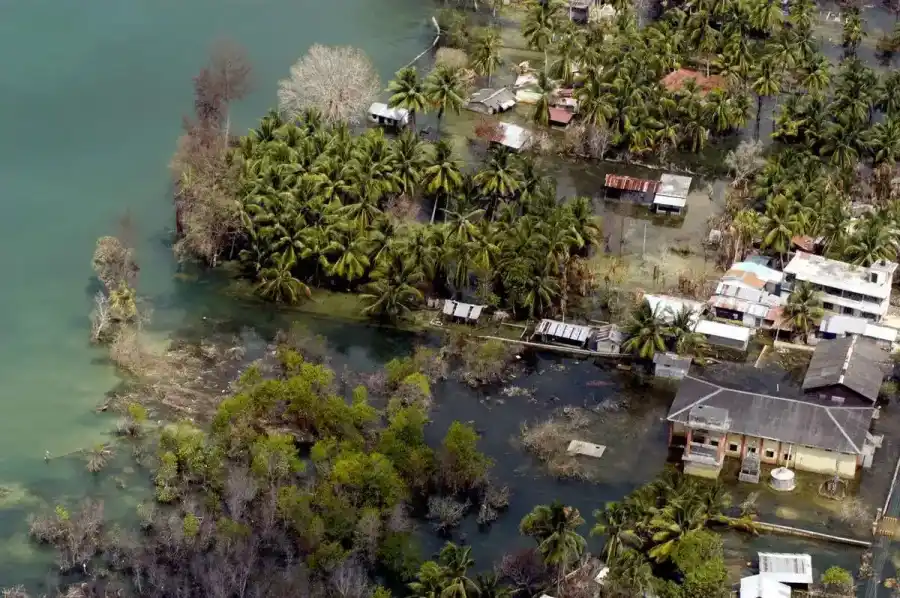
01 / Structural Reinforcement
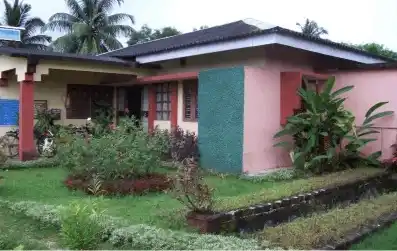
02 / Continuous Operations
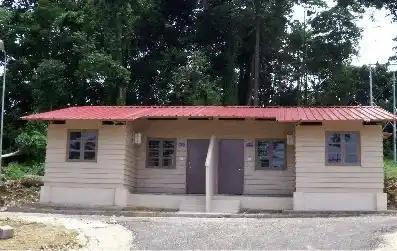
03 / Modernized Standards
Execution Challenge
Deep geographic isolation required moving 100% of construction aggregates and skilled personnel from the mainland over open ocean pathways.
The islands lacked functional deep-water ports or cargo berths, forcing complex sea-to-shore vessel transfers under volatile wave actions.
Furthermore, an extended six-month monsoonal season truncated civil execution windows, while the absolute absence of localized manufacturing required building fully self-sufficient engineering colonies from scratch.
Strategic Role
Mr. Avarrsekar spearheaded the pre-bid positioning strategy, meticulously mapping the organization's maritime logistics capabilities to address strict public procurement criteria.
He instituted a centralized project governance office to manage complex risk oversight across maritime channels. Serving as the executive interface with public works committees and tribal councils, he accelerated engineering design modifications, insulating field technical workflows from administrative delays to protect critical execution schedules.
Actions Taken
Formulated a multi-island parallel civil execution schedule to fast-track concurrent superstructure construction.
Established dedicated off-site mainland port consolidation hubs in Chennai and Kolkata.
Engineered a customized landing system utilizing shallow-draft vessels to beach materials directly onto remote shores.
Deployed fully self-sufficient island engineering encampments complete with captive concrete batching and power fields.
Implemented real-time open-sea satellite weather monitoring systems to optimize maritime cargo transits.
Outcome
The turnaround delivered 4,334 single-storied permanent shelters completely equipped with independent electrical, water, and sanitary infrastructure, permanently stabilizing local socioeconomic lifelines.
Engineered to withstand Seismic Zone V parameters, the asset establishes a national benchmark for remote post-disaster public infrastructure execution.
For industry leaders, it demonstrates how aligning complex maritime logistics with objective procurement criteria yields highly predictable, resilient assets that safeguard public safety.
Technical Data of Record
Scope of Work
Turn-key construction of 4,334 units of permanent, single-storied disaster-resilient shelters including integrated internal water supply, sanitary installations, and structural internal electrification systems across multi-island locations.
Key Specifications
Disaster-resilient single-storied structural layouts; high-strength reinforced cement concrete (RCC) foundations rated for Seismic Zone V; anti-corrosive materials resilient to severe marine salinity.
Major Deliverables
4,334 fully functional permanent shelters, integrated internal plumbing networks, completed sanitary assets, structural internal electrification grids, and fully self-sufficient island logistics encampments.
Technical Complexities
Executing multi-island mass housing civil engineering under absolute geographic isolation with zero local materials or technical labor; navigating open-sea maritime logistics with high-wave cycles and no functional deep-water cargo berths; compressing execution timelines around extended six-month monsoonal rain seasons.
Safety/Quality Measures
Real-time open-sea satellite weather tracking for maritime cargo vessels; 100% material traceability and non-destructive structural concrete cube testing; strict institutional health, sanitation, and vector-control safety matrices within labor encampments.
Location | Client
Car Nicobar and Little Andaman Islands, Andaman & Nicobar Archipelago, India | Central Public Works Department (CPWD) - Andaman Central Division
Discover the Full Strategy
Explore the detailed methodologies, execution frameworks, and deep-dive analytics in our comprehensive case study.
Request the Project Case Study
Popular Project