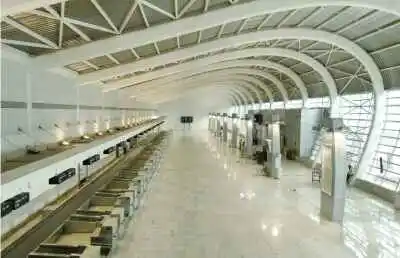
01 / Structural Reinforcement
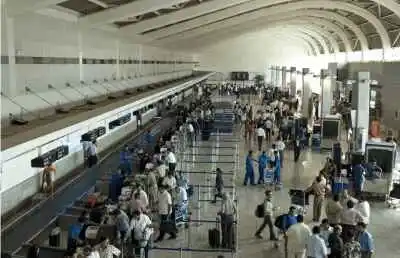
02 / Continuous Operations
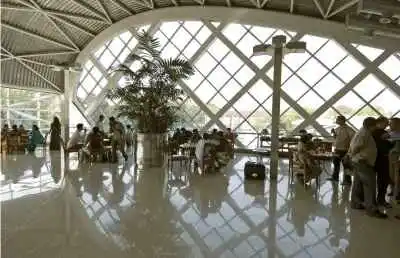
03 / Modernized Standards
Execution Challenge
The primary constraint involved executing heavy structural interventions, including installing pillar-less check-in halls and massive Kalzip roofing, within a high-security, live environment processing millions of active passengers.
Traditional linear sequences were unviable due to a strict zero-downtime operational mandate.
Logistical footprint limitations, tight night windows, unmapped services, and severe structural safety requirements demanded flawless coordination across regulatory aviation authorities, airport operators, and independent engineering consultants.
Strategic Role
As executive lead, Mr Avarrsekar directed the pre-bid positioning strategy, mapping the firm's rapid mobilisation and technical engineering capabilities directly to complex aviation evaluation criteria.
He established a centralised project governance and risk oversight matrix to balance intense operational accountability.
Executing his visionary leadership and infra governance excellence, Mr Avarrsekar served as the primary interface with airport operators and regulatory bodies.
He decoupled field engineering from administrative friction, fast-tracking approvals to ensure absolute compliance with compressed schedules.
Actions Taken
Implemented a micro-scheduled parallel workflow separating structural expansions from active passenger environments.
Deployed advanced pillar-less steel structures and specialised Kalzip roofing systems during nocturnal windows.
Integrated state-of-the-art automated baggage handling, continuous CCTV surveillance, and high-volume HVAC networks.
Established strict, dust-insulated and acoustic-insulated containment protocols to safeguard operational air terminal areas.
Managed synchronized just-in-time logistics to overcome airside and landside spatial layout restrictions.
Outcome
The successful turnaround expanded Terminal 1B's footprint to include 80 modernised check-in counters, upgraded baggage processing, and institutional-grade transit infrastructure.
Executed with zero disruption to active aviation operations, the project sets a definitive industry standard for brownfield aviation upgrades.
For senior infrastructure leaders, it demonstrates how aligning multi-disciplinary engineering mastery with rigid bid criteria drives predictable asset performance, mitigates complex regulatory risks, and secures lucrative public infrastructure mandates.
Technical Data of Record
Scope of Work
Expansion and modification of the domestic terminal facility including 80 check-in counters, pillar-less wide-span structures, Kalzip roofing systems, premium lounges, baggage makeup/claim loops, and integrated MEP/CCTV systems.
Key Specifications
Pillar-less wide-span structural steel frames; Kalzip aluminum standing seam roofing; high-fidelity CCTV surveillance integration; automated baggage handling conveyor loops.
Major Deliverables
80-counter unified check-in concourse, modernized arrival and departure terminal zones, integrated automated baggage sorting loops, premium VIP lounges, and streamlined mezzanine dining areas.
Technical Complexities
Executing heavy structural steel modifications and civil expansions immediately over a high-security, active airport environment processing millions of passengers; navigating intense airside/landside logistics; coordinating multi-agency clearances.
Safety/Quality Measures
Strict compliance with Bureau of Civil Aviation Security (BCAS) standards; 100% dust-insulated and acoustic containment enclosures; non-destructive ultrasonic weld testing; continuous real-time geodetic instrumentation grids.
Location | Client
Chhatrapati Shivaji International Airport (CSIA) Terminal 1B, Santacruz, Mumbai, India | Mumbai International Airport Limited (MIAL) / Airport Authority of India (AAI)
Discover the Full Strategy
Explore the detailed methodologies, execution frameworks, and deep-dive analytics in our comprehensive case study.
Request the Project Case Study
Popular Project