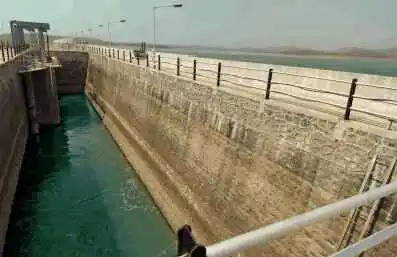
01 / Structural Reinforcement
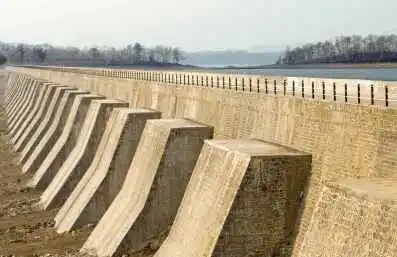
02 / Continuous Operations
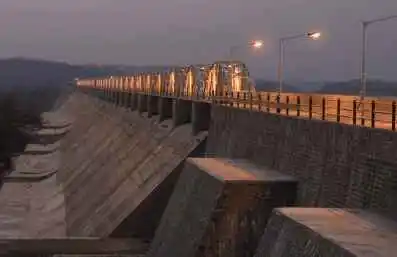
03 / Modernized Standards
Execution Challenge
The primary execution constraint involved stabilizing a live, high-capacity reservoir without lowering water levels or disrupting municipal water transmission.
Geotechnical complexities on the Deccan Trap basaltic foundation demanded non-destructive anchoring techniques.
Working on an aging, high-consequence masonry structure meant that induced vibrations from traditional civil interventions threatened the dam's structural stability.
Additionally, seasonal monsoonal cycles restricted the active downstream construction window to narrow, non-rainy periods.
Strategic Role
Mr. Avarrsekar directed the critical pre-bid positioning strategy, meticulously aligning the firm's specialized marine and mass-concrete engineering methodologies with MCGM's technical compliance matrices.
He established an institutional project governance and risk oversight office to de-risk execution.
By operating as the strategic executive interface with state municipal engineers, he accelerated design validations and material clearances, insulating project velocity from the complex administrative and public accountability surrounding this critical water asset.
Actions Taken
Formulated an accelerated mass-concrete deployment schedule for downstream buttress installation.
Deployed zero-vibration drilling methodologies for deep foundation anchoring into basaltic rock.
Integrated real-time structural deflection monitoring systems to maintain asset stability during execution.
Managed complex multi-tiered logistics to transport heavy civil aggregates through ecological sanctuary zones.
Enforced specialized non-destructive testing protocols certifying 100% material bonding with legacy masonry.
Outcome
The successful installation of massive downstream concrete buttresses restored the dam’s stability to modern seismic requirements, ensuring complete water security for Mumbai.
The engineering turnaround validated how aligning complex technical competencies with rigid public sector procurement criteria mitigates critical infrastructural vulnerabilities.
For contemporary contractors, this success case illustrates how translating specialized engineering risks into structured tender responses drives high-margin business growth and predictable project handovers.
Technical Data of Record
Scope of Work
Structural strengthening and raising of the legacy masonry gravity dam by constructing massive downstream reinforced concrete buttresses, foundational rock anchoring, and specialized interface pressure grouting.
Key Specifications
Mass concrete buttresses; Deccan Trap basalt rock anchors; specialized low-heat of hydration cement mixes with fly ash blends; high-pressure epoxy and polymer-modified grouting systems.
Major Deliverables
Seismically stabilized dam gravity structure, complete downstream concrete buttress network, validated foundation anchorage, and comprehensive real-time structural health instrumentation logs.
Technical Complexities
Executing heavy civil mass concrete works under continuous full hydrostatic reservoir load; performing rock excavation without explosive blasting near a sensitive 19th-century masonry footprint; managing strict logistics within a restricted Wildlife Sanctuary zone.
Safety/Quality Measures
Continuous monitoring via piezometers and real-time ultrasonic joint-meters; 100% material testing and core sampling tracking; closed-loop environmental runoff barriers protecting local forest and aquatic ecosystems.
Location | Client
Tansa River, Thane District, Maharashtra, India | Municipal Corporation of Greater Mumbai (MCGM)
Discover the Full Strategy
Explore the detailed methodologies, execution frameworks, and deep-dive analytics in our comprehensive case study.
Request the Project Case Study
Popular Project